
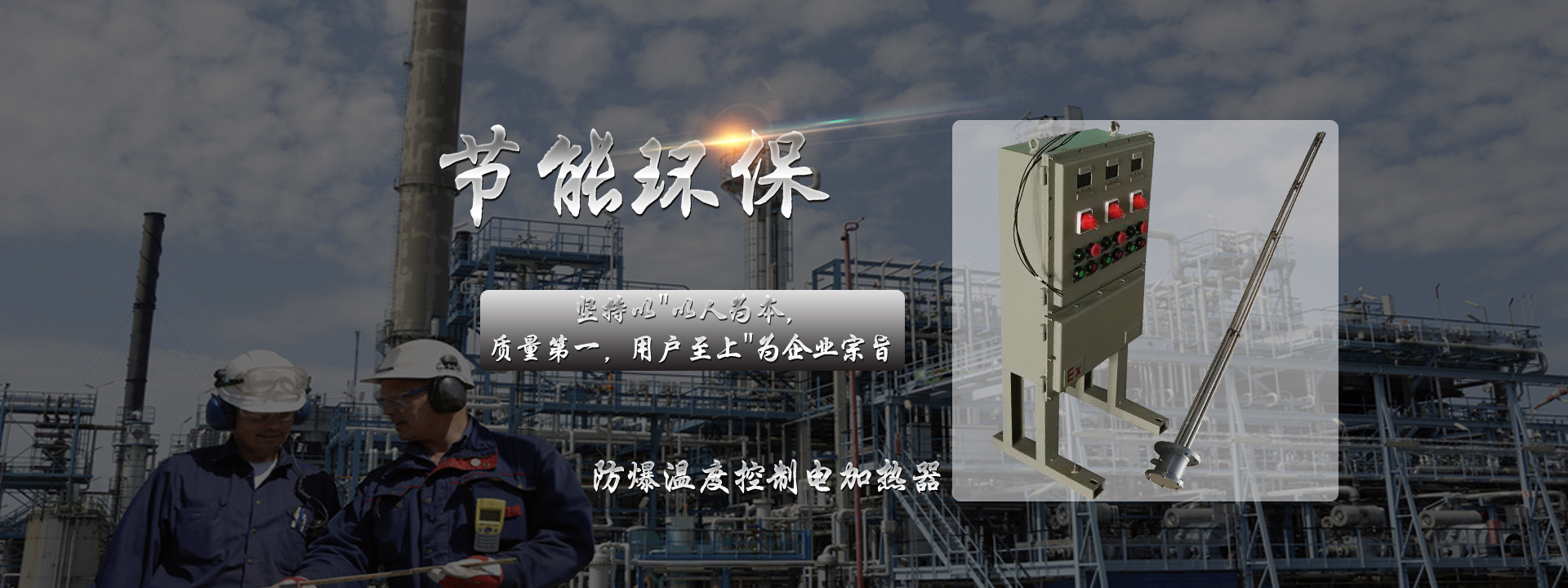
High-temperature explosion-proof thermocouples are mainly used in industry, especially widely applied in chemical industrial control systems. In addition to serving as sensors, their major feature is explosion-proof, suitable for use in factories with flammable and explosive chemical gases, significantly improving factory safety.
The service life of high-temperature explosion-proof thermocouples is related to their degradation.
The so-called degradation of thermocouples refers to the aging and deterioration phenomenon after use. For thermocouples made of metal or alloy, their internal grains gradually grow at high temperatures. Meanwhile, the position or shape of a small amount of impurities in the alloy will also change, and they will react with reducing or oxidizing gases in the surrounding environment. Along with the above changes, the thermoelectric potential of high-temperature explosion-proof thermocouples will also change extremely sensitively. Therefore, the degradation phenomenon of thermocouples is inevitable.
Service life of high-temperature explosion-proof thermocouples
The degradation of high-temperature explosion-proof thermocouples is a quantitative process, and it is difficult to quantify it. It varies with the type, diameter, operating temperature, atmosphere, and time of the thermocouple. The service life of a thermocouple refers to the time when the degradation develops beyond the allowable error, or even breaks and cannot be used.
For the life of assembled high-temperature explosion-proof thermocouples, Chinese standards only require stability of the thermocouple. That is, the change in thermoelectric potential before and after use for 200h at a certain temperature is specified. However, no provisions on service life have been found. Japanese requirements for thermocouple service life are based on the continuous use time specified in the Japanese JIS (C-1602-1995) standard. For B, R, S type thermocouples, it is 2000h; for K, E, J, T type thermocouples, it is 10000h. In actual use, assembled thermocouples usually have protective tubes, and bare wires are used only in special cases. Therefore, in most cases, the life of the protective tube determines the life of the thermocouple. To judge the actual service life of a thermocouple, it is necessary to collect and accumulate data under actual use conditions over a long period to give a more accurate result.
The life of high-temperature explosion-proof thermocouples is greatly affected by the sheath material because the armored thermocouple has a sheath to isolate it from the external environment. Therefore, the sheath material has a significant impact on the life of the armored thermocouple, and the thermocouple wire and metal sheath must be selected according to the application. Once the material is selected, its life increases with the diameter of the armored thermocouple. Compared with assembled thermocouples, armored thermocouples have many advantages, but their service life is often lower than that of assembled thermocouples.
http://www.yzdrdq.com/