Each material has its corresponding surface load. Previously, we discussed the impact of the surface load of electric heating wires on them, highlighting the importance of surface load. During the sales process of our company's heating tube products, customers sometimes have doubts about the surface load of heating tubes. Occasionally, customers ask, "Why can the surface load be high when heating water, but not when heating oil?" Here, we briefly share the reasons:
The surface load of tubular heating tubes used for heating oil is determined by the heated medium. That is, the premise should be that the oil on the surface of the heating tube is not burned. Since the thermal convection of oil is closely related to its viscosity, and viscosity depends on the temperature of the oil. For example, when the oil temperature of a diesel engine is 5-8°C, its convection ability is very poor. At 180°C, its convection ability is still not as good as that of water. Therefore, the heat transfer conditions from the surface of the heating tube to the heated oil are much worse than those in water. This is why when heating water, we can design a surface load much higher than when heating oil.
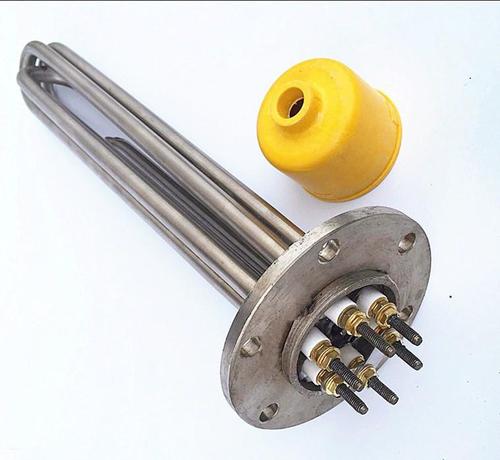
When designing electric heating tubes for heating oil, we consider not only the surface load design but also the carbon deposition of the oil. Depending on the installation method, they are generally divided into threaded flange electric heating tubes (usually used for oil heating with relatively low power) and flat flange electric heating tubes (usually used for oil heating with high power).
Customers must choose the appropriate product based on their equipment needs to get value for money. Heating tubes are widely used in heating equipment. The quality of heating tube products is directly related to the manufacturer. Therefore, careful consideration is essential when selecting products.