

1. Before using a multimeter to test, first visually inspect whether the protective tube is corroded, penetrated, or leaking water.
Then use a multimeter to measure continuity. The resistance of an assembled thermocouple is generally not greater than 2 ohms, while the resistance of a mesh type is generally not greater than 50 ohms. Generally, if the resistance exceeds 1k ohm, it can be determined as faulty.
2. Measure the resistance with a multimeter; if the resistance exceeds 100k ohms, it is faulty.
3. Use the multimeter's ohmmeter function to test the thermocouple. Set the resistance range, connect the two ends, and gently heat the tip with a lighter. If the multimeter pointer clearly increases or decreases, it indicates the thermocouple is good; if the pointer does not move, it is faulty. You can also use the millivolt range of the multimeter to measure the voltage across the two ends; if there is no voltage, it is faulty.
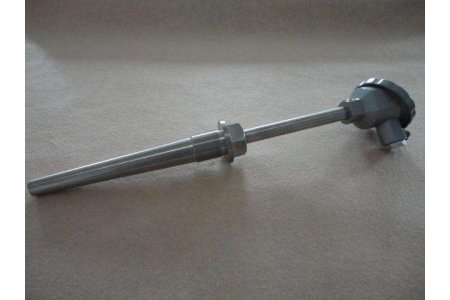
Precautions
1. The above methods are only for simple thermocouples and explosion-proof thermocouples. Long-term operation at high temperatures can cause temperature drift. For example, K-type thermocouples operating above 1000°C for a long time, E-type above 800°C, and S-type above 1250°C may experience drift. A drift of 2–5°C at 1000°C is common.
2. According to relevant technical regulations, thermocouples are mandatory verification standard measuring instruments, involving energy conservation and safety production. Generally, they must be sent to the flow meter measurement testing center for verification after one year of use.