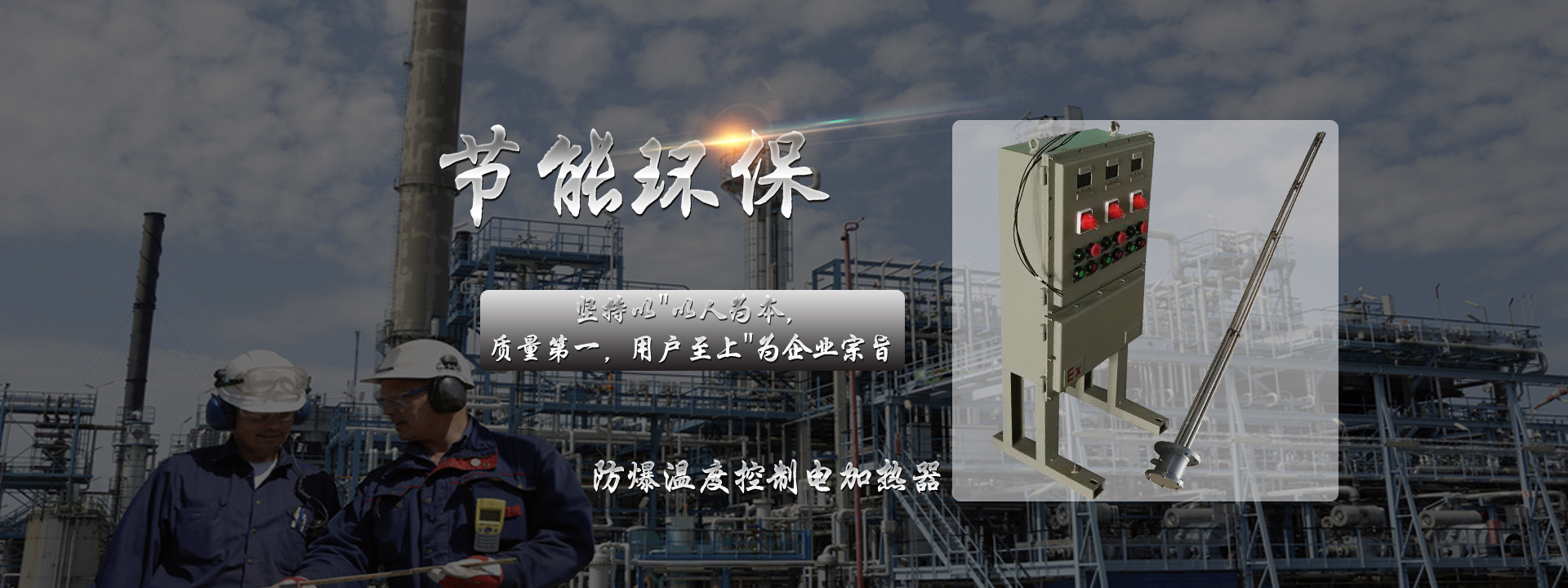

Thermal Oil Electric Heating Rod
Product Features:
1. The electric heating rod uses the mineral insulated heating cable/MI heating cable (or high-performance alloy electric heating tube) developed by our company as the heating element.
2. The electric heating rod has a solid structure, high bending strength, is compact, sealed, and explosion-proof, meeting the heating and insulation requirements of various types of storage tanks for petroleum and its products. Explosion-proof grade EXd II B T1-T6.
3. The electric heating rod heats evenly, has low surface heat load, reliable operation, and long service life. No reactive power loss, high thermal efficiency, easy operation and maintenance, no daily maintenance required.
4. The electric heating rod has good corrosion resistance to crude oil and its product media.
5. The external geometric dimensions of the electric heating rod can be produced according to user requirements.
Thermal Oil Electric Heating Rod
Instructions:
The container explosion-proof electric heating rod (hereinafter referred to as electric heating rod|electric heating rod) is a product specially designed and manufactured for electric heat tracing and insulation of containers such as storage tanks. For a long time, the heat tracing and insulation of media in storage tanks mainly used coil-type heaters with steam or hot water as the heat medium. Coil-type heaters have problems such as high accident rate, difficult maintenance, and high energy consumption. For example, the heat tracing and insulation of single-well oil tanks in oil fields have been troubled by users due to heat source limitations. The electric heating rod is developed to address these issues.
Over the years, the advanced technical performance of this product has been verified through use in various oil field production plants, oil pumping stations, refineries, oil depots, offshore oil platforms, pharmaceutical factories, and other locations.
Placement of the heating rod: For large fish, the heating rod should be fixed securely, because some large fish can easily knock it against the tank wall and break it with a tail flick. Do not bury the heating rod in the substrate or let it directly contact the glass. There have been cases where direct contact with glass caused uneven heating and cracking. Placing the heating rod diagonally or horizontally provides better heat dissipation, even if it may not look as good. Since heated water rises, a vertically placed rod has a relatively small temperature difference between the hot water generated at the bottom and the top, slowing heat conduction, which reduces heating efficiency, prolongs heating time, and wastes energy. For clumsy fish like discus, add a protective sleeve to the heating rod to prevent burns. If there are two heating rods in the tank, try to place them on opposite sides for even heating. The thermometer should be placed farthest from the heating rod to ensure the measured water temperature is not from the just-heated water.