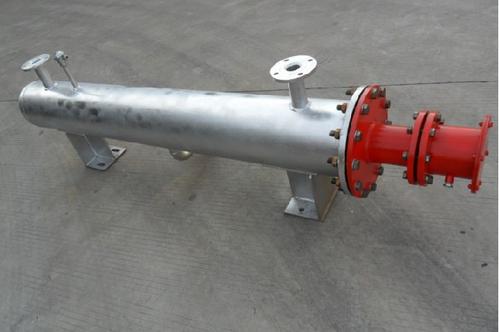

What are the design features of explosion-proof electrical appliances
Generally speaking, explosion-proof electrical appliances refer to a type of electrical equipment used in places where explosive gases and vapors exist. Chemical production often encounters various explosive gases and vapors. In places with these media, correctly selecting appropriate explosion-proof electrical appliances according to relevant codes, standards, and regulations is an important measure to ensure safe production and prevent explosions and fires. They are classified into flameproof, increased safety, intrinsic safety, pressurized, oil-immersed, sand-filled, non-sparking, and special types. Main varieties include explosion-proof transfer switches and knife switches, explosion-proof automatic air switches, factory explosion-proof magnetic starters, explosion-proof control buttons, explosion-proof operating columns, explosion-proof limit switches, explosion-proof plugs and sockets, explosion-proof junction boxes, explosion-proof connection boxes, explosion-proof fittings and sealing materials, explosion-proof electromagnets, and explosion-proof solenoid valves.
Design Features
Enclosure Design
The enclosures of portable and intrinsically safe instruments sometimes use plastic enclosures, and sometimes metal enclosures. When plastic enclosures are selected, to ensure that dangerous static electricity does not accumulate during normal operation, the surface resistance must not exceed 1×10^9 Ω. Plastic enclosures must pass impact resistance tests and thermal stability tests.
Electrical equipment that produces sparks, arcs, or dangerous temperatures during normal operation, and Class I electrical equipment with power greater than 250W or current greater than 5A, must use a junction box for electrical connection with the equipment body. The junction box is a component specifically for connecting cables or wires to electrical equipment. Class I flameproof electrical equipment widely uses flameproof junction boxes. The inner wall of the junction box should be coated with arc-resistant paint, and the flameproof joints on the junction box and main cavity should be treated with anti-rust measures, such as applying anti-rust oil.
Additionally, for explosion-proof electrical appliances, there must be a permanent Ex explosion-proof mark and MA safety mark in a conspicuous place on the enclosure.
Circuit Design
First, the circuit design must fulfill the electrical functions of the appliance and ensure the correctness of the electrical principles. Second, the electrical clearances, creepage distances, and insulation parameters of explosion-proof electrical appliances must comply with the requirements of GB3836. For example, when developing the QF40 explosion-proof starter, the creepage distance of the terminals was designed to be no less than 16 mm, and the electrical clearance no less than 10 mm. The creepage distance of electrical components and their arrangement inside the flameproof cavity is no less than 16 mm, and the electrical clearance no less than 10 mm. The flameproof junction cavity is equipped with an internal grounding bolt, and the enclosure is equipped with an external grounding bolt.
The developed intrinsically safe steel wire frequency meter has a maximum operating current and voltage under normal and fault conditions that do not exceed the designed maximum allowable current: its creepage distance is 3 mm, the creepage distance under the insulating coating is 1 mm, and the electrical clearance is 3 mm.
Power Supply Design
Common independent power sources for intrinsically safe portable electrical equipment are dry cells and storage batteries. Both dry cell and storage battery power sources belong to resistive circuits, and the power source safety parameters can be determined according to the minimum ignition current curve for resistive circuits. Based on the highest battery voltage, find the corresponding minimum ignition current, then divide by the safety factor (2) to obtain the design allowable maximum safety current for the battery. A severe discharge state of the battery is a direct short circuit. Therefore, the maximum short-circuit current of the battery should be used as the benchmark for measuring the intrinsic safety performance of the power source. If the maximum short-circuit current of the battery exceeds the design allowable value, a current-limiting resistor must be added in series. Moreover, the battery or storage battery and the current-limiting resistor are encapsulated together to form an intrinsically safe component. Encapsulation materials include epoxy resin, silicone rubber, industrial paraffin, etc.