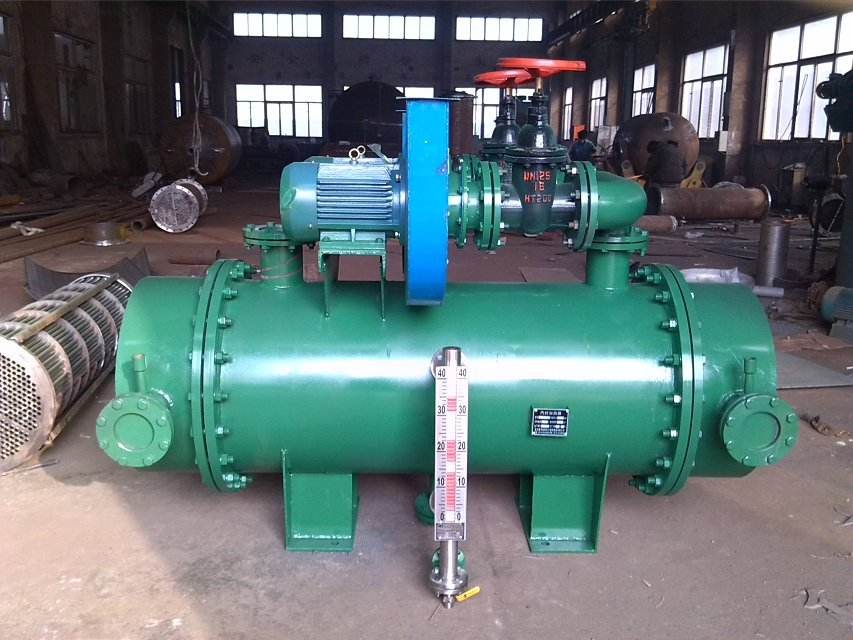
Shaft Seal Heater
Shaft seal heater is a device that recovers shaft seal leakage steam and uses its heat to heat condensate, reducing energy loss and improving unit thermal efficiency. When the steam turbine adopts an internal leakage shaft seal system, a shaft seal heater (shaft seal cooler) is generally installed to heat condensate or demineralized water, recover shaft seal leakage steam, thereby reducing shaft seal leakage and heat loss, and improving the environmental conditions of the workshop.
The air entering with the shaft seal leakage steam is often led through a connecting pipe to the diffuser of the water-jet air ejector, and is extracted by the negative pressure of the latter, thereby ensuring a slight vacuum state in the shaft seal heater. In this way, the pressure in the chambers connecting each shaft seal and the shaft seal heater is reduced, and the shaft seal steam does not leak outward. There are also methods using shaft seal air ejectors or fans to create negative pressure and discharge the mixed air. The shaft seal air ejector is generally a steam-jet air ejector, and its matching shaft seal heater has two stages. The leakage mixture enters the first stage, where steam is condensed and air is extracted, mixed with working steam, and after diffusion, discharged to the second stage, where steam is condensed and air is discharged through the exhaust port.
Function:
It is used to extract the steam-air mixture from the steam turbine gland sealing system, preventing steam from leaking from the end glands into the turbine hall and oil system, thereby polluting the environment and damaging oil quality. This steam-air mixture enters the shaft seal cooler and is cooled into water, heating the condensate, while the remaining uncondensed gas is discharged to the atmosphere.
Others:
The shaft seal heater is also called shaft seal cooler or gland seal heater. In modern steam turbines, the shaft seal system often adopts a self-sealing type, and the thermal system has only one shaft seal cooler. Different manufacturers may have different names, but they all refer to the same equipment.
In early 200MW units, the thermal system was equipped with a shaft seal heater and a shaft seal cooler. The shaft seal heater used the leakage steam from the high-pressure shaft seal as the heating steam source, with a pressure higher than that of the No. 8 low-pressure heater, aiming to recover the heat and working fluid of the shaft seal leakage steam. The shaft seal cooler was used to cool the shaft seal extraction steam (or used the shaft seal extraction steam as the heating source), and during operation, the cooler was in a vacuum state. Other units generally only have one shaft seal cooler.