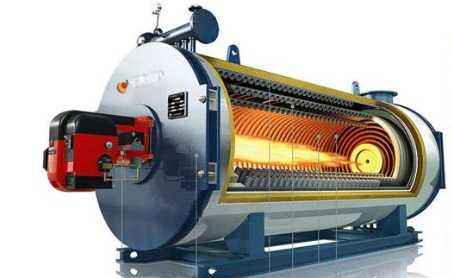
The viscosity of heavy oil delivered from the fuel supply pump is relatively high. To meet the atomization requirements of the nozzle, the fuel needs to be heated. For this purpose, a fuel oil heater is installed. The heating temperature of the oil is determined according to the user's requirements.
Definition;
Since fuel oil (especially heavy oil or oil residue) has high viscosity, to meet the requirements of the boiler or main engine for fuel fluidity and atomization, the fuel must be heated in a heater using fresh saturated steam to an appropriate temperature for atomization.
Layout;
If the user is very close to the fuel supply pump house, the heater can be installed on the outlet pipe of the fuel supply pump outside the pump house for centralized heating of the fuel supply.
If the user is far from the fuel supply pump house, it is more appropriate to install the heater near the user, because transporting high-temperature hot oil over long distances results in significant heat loss along the line, making it difficult to ensure the oil temperature required by the user.
Determination;
When fuel oil heaters are arranged centrally, such as on the main pipe supplying each furnace in the workshop, the amount of oil to be heated is taken as the maximum consumption of the 1~2 furnaces with the highest oil consumption, plus the average consumption of the remaining furnaces. If a large return system is used and the returned oil passes through the heater, the return oil volume should be added.
If fuel oil heaters are arranged dispersedly in front of each furnace, the amount of oil to be heated is taken as the maximum consumption of the furnace. If there is hot oil return, the return oil volume must also be added.
Heaters generally do not consider standby; a bypass pipe is installed between the inlet and outlet. Cleaning and maintenance of the heater are carried out in conjunction with user maintenance. When multiple groups of heaters are installed, group isolation measures should be considered to facilitate cleaning and maintenance.
Types;
The heat sources for fuel oil heaters are steam and electricity. Steam is widely used to heat fuel oil, as this method is more economical and safe. However, for users with low oil consumption, if the required heating temperature is high and the steam pressure in the plant is too low to meet the heating requirements, electric heating may be considered, but it has high power consumption and operating costs.
Steam-heated fuel oil heaters include the following types:
Jacketed Pipe Heater
Jacketed pipe heaters are divided into single-jacket and multi-jacket types. In their structure, the inner pipe carries oil, and steam flows in the jacket between pipes.
Advantages: Simple to manufacture, easy to clean due to large pipe diameter, no need for disassembly and cleaning for three years of operation, thus low maintenance costs.
Disadvantages: Large volume, high steel consumption.
Shell and Tube Heater
Shell and tube heaters are divided into U-tube type and straight tube bundle type. Since the former is difficult to clean, the straight tube bundle type is mostly used, with oil flowing inside the tubes and steam outside.
Advantages: Compact structure, small volume, low steel consumption, suitable for heating large amounts of oil.
Disadvantages: Relatively complex structure, high manufacturing requirements, short cleaning cycle.
YJ Type Fuel Oil Heater
The YJ type fuel oil heater adds a spiral aluminum strip inside the oil tubes of the shell and tube heater, offering advantages such as small size, light weight, and high heat transfer efficiency. Due to the rotational flow of oil inside the tube, the heat transfer coefficient is increased.
Jacket Heating Along the Oil Supply Pipe
Jacket heating involves placing a steam pipe over the oil pipe, with insulation wrapped around the steam pipe. The oil inside the oil pipe absorbs heat from the steam jacket, and the oil temperature gradually rises. Therefore, jacket heating is a heating method during the fuel oil transportation process. If the user is close to the fuel supply pump outlet, or for oil pipes with very small diameters, this method can be considered when it is economically and technically reasonable to use jacket heating for fuel oil.